
How PMIS supports smarter invoicing?
From manual processes to PMIS
Supporting smarter invoicing
Port operations have always relied on a combination of experience, structured routines, and the tools available at the time. For many ports, administrative and invoicing processes have developed gradually. They are built on spreadsheets, manual workflows, and, in some cases, legacy software systems that have been adapted over the years.
These approaches have enabled ports to operate effectively, offering flexibility and familiarity for teams managing complex day-to-day activities. However, as operations become more connected and data-driven, expectations around consistency, transparency, and efficiency are evolving.
Rather than replacing existing practices, many ports are now exploring how systems like PMIS (Port Management Information Systems) can complement and strengthen the way they work:
- introducing additional structure to the processes
- supporting a more unified view by centralizing data into a single system
- operating within a connected ecosystem
- standardizing how data is structured, stored, and processed.
From practical workflows to structured systems
In many environments, processes such as cargo recording, tariff handling, and invoicing have grown organically. A spreadsheet may support calculations, another file may track cargo volumes, and additional tools may be used for reporting or financial reconciliation.
Over time, this creates a working ecosystem which reflects the expertise of the people using it. At the same time, as volumes increase and more stakeholders rely on the same information, maintaining consistency across these processes can require increasing effort.
For example, the same data may need to be entered into or verified in multiple places, and reporting may involve combining inputs from several sources. While manageable, this introduces variability, especially when accuracy and traceability become more critical.
Additionally, continuity of the ports invoicing process may rely on too narrow shoulders as complexity of invoicing has increased and only few people in the organisation know what the invoicing rules are for certain cases and even fewer can use excel wizardry to type those rules into excel spreadsheets.
Also, more complex invoicing process due to more complex cargo coming in, increase of volumes or client specific requirements for invoicing may mean that ports need to invoice on non-optimal schedule e.g. once per month instead of after every port call.
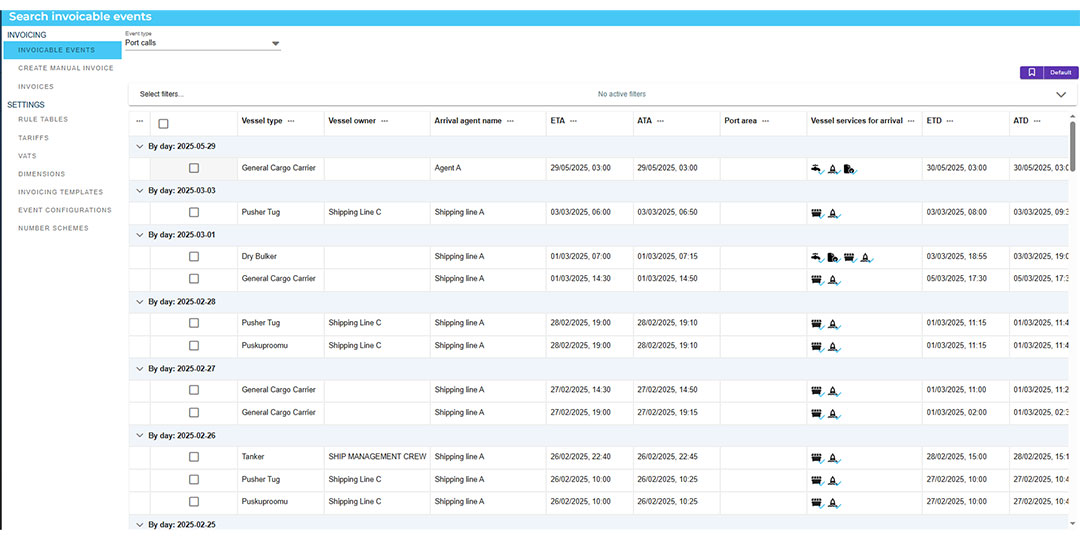
PMIS solutions approach this differently by bringing these elements into a single, structured environment. Data is captured once, shared across workflows, and supported by standardized logic reducing the need for duplication while supporting consistent outcomes.
Supporting accuracy and transparency in invoicing and data handling
Invoicing and cargo-related processes depend on precision. Tariff structures, vessel information, client specific rules, and cargo volumes all need to align correctly to ensure accurate billing and reporting.
In manual or spreadsheet-based environments, this accuracy is supported by careful handling and experience. However, it can also rely on individual checks, formula management, and consistent data entry practices.
By applying validation rules, standardized classifications, and automated calculations, it supports consistent tariff application and reduces the likelihood of discrepancies. At the same time, built-in logging creates a clear record of how data has been handled over time.
This combination of structure and visibility helps create a more transparent foundation for invoicing and reporting without removing the need for professional expertise.
In the next blog we will discuss how PMIS enables teams to work together seamlessly to ensure efficient workflows in a port. Stay on board!
Book A Demo
How Gisgro helps your work
At Gisgro, we know that each role within a port comes with its own unique challenges and requirements. Discover how Gisgro can enhance your work by exploring benefits it provides for your role—transforming complex port data into clear, actionable insights that empower you to take full control.
Real people. Real support.
Whether you’re curious about how GISGRO could work for your port or you’re ready to take the next step, we’d love to hear from you. Our team is friendly, experienced, and happy to help.
Just fill out the form and we’ll get back to you soon.